
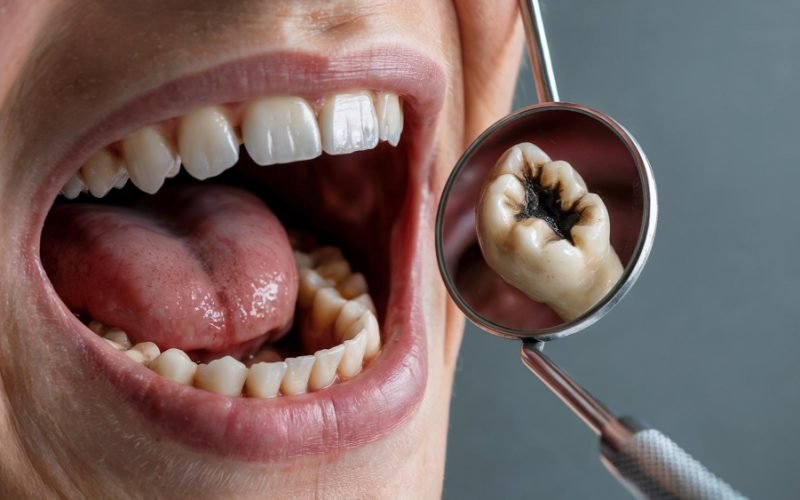
What Are Dental Caries?
Dental caries, also known as tooth decay or cavities, are damaged areas in the hard surface of your teeth. These spots can turn into small holes or pits. In fact, dental caries are one of the most common dental problems worldwide. According to the World Health Organization (WHO), almost everyone will have dental caries at some point. Early care can help prevent serious damage.
Causes and Risk Factors
Dental caries develop when bacteria in your mouth produce acids that wear down tooth enamel. Over time, these acids create cavities. However, several factors can increase your risk:
- Poor oral hygiene: Not brushing or flossing regularly lets plaque build up.
- Frequent snacking: Eating sugary foods or drinks often gives bacteria more fuel.
- Dry mouth: Less saliva means less protection for your teeth.
- Worn fillings or dental devices: These can trap food and bacteria.
- Age: Children and older adults are at higher risk.
For example, people with diabetes or those who smoke may also face a higher risk of dental caries.
Common Symptoms and Signs
At first, dental caries may not cause any pain. But as the decay grows, you might notice symptoms. For instance, you may feel:
- Toothache or pain when biting down
- Sensitivity to hot, cold, or sweet foods
- Visible holes or pits in your teeth
- Brown, black, or white spots on the tooth surface
- Bad breath or a bad taste in your mouth
Sometimes, you may not notice any signs until the cavity is large. Therefore, regular dental checkups are important.
Diagnosis Methods
Dentists use several methods to find dental caries. First, they will ask about your symptoms and check your teeth. Next, they may use a small mirror and dental tools to look for soft spots or holes. In addition, dental X-rays can help spot cavities that are hard to see. Early diagnosis means easier treatment and less pain.
Treatment Options
Treatment for dental caries depends on how severe the decay is. Your dentist may suggest:
- Fluoride treatments: These can help repair early damage.
- Fillings: Dentists remove the decayed part and fill the hole with a safe material.
- Crowns: If the decay is large, a crown covers and protects the tooth.
- Root canal: If the decay reaches the tooth’s inner pulp, a root canal may be needed.
- Tooth extraction: In severe cases, the tooth may need to be removed.
With early care, most dental caries can be treated easily and painlessly.
Prevention Tips and Lifestyle Guidance
Preventing dental caries is possible with good habits. Here are some tips to help you keep your teeth healthy:
- Brush your teeth twice a day with fluoride toothpaste
- Floss daily to remove food and plaque between teeth
- Limit sugary snacks and drinks
- Drink plenty of water, especially after eating
- Visit your dentist regularly for checkups and cleanings
- Consider dental sealants for extra protection, especially for children
Additionally, eating a balanced diet and avoiding tobacco can help lower your risk. According to the CDC, these steps are key to preventing dental caries.
Conclusion
In summary, dental caries are common but preventable. Early detection and proper care can save your teeth and avoid pain. For the best results, follow good oral hygiene and see your dentist regularly. Book your appointment at OrcaDent Multi Speciality Dental Clinic for expert evaluation and personalised treatment of dental caries. Protect your smile today with professional care.