
Save Your Natural Tooth With Root Canal Treatment
Relieve tooth pain and protect your natural tooth with custom root canal care designed to eliminate infection, restore function, and bring back a healthy smile.
- Pain Relief
- Natural Tooth Preservation
- Personalised Care
- Healthy Smile
- Restored Tooth Function
Root Canal Treatment
A Modern Solution for
Infected or Damaged Teeth
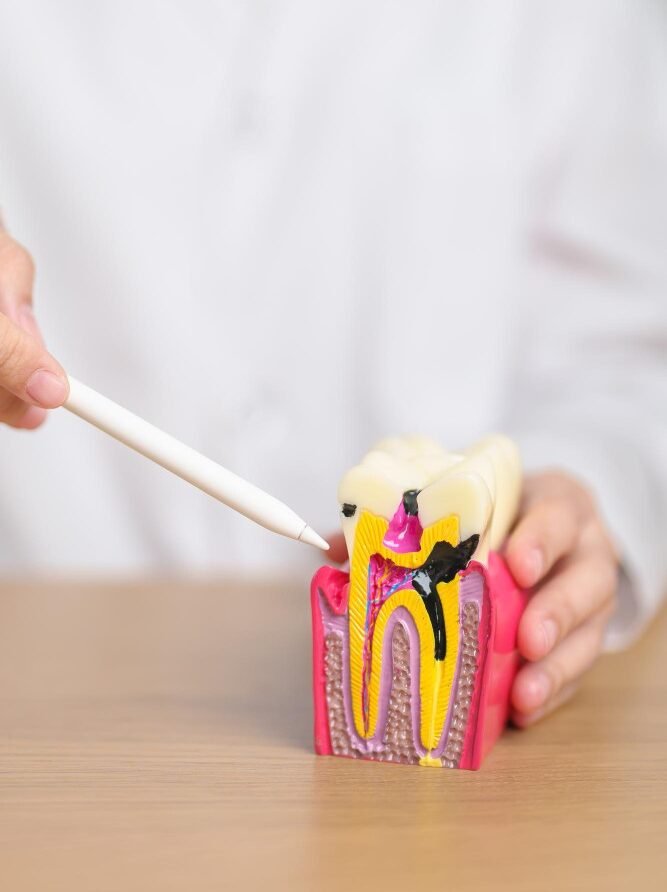
Root canal treatment is a dental procedure used to treat infection or inflammation inside a tooth. It helps remove the affected tissue, clean and disinfect the root canals, and preserve the natural tooth.
Your treatment begins with a detailed dental examination. Based on your symptoms, tooth condition and diagnostic findings, your dentist will recommend the most suitable treatment approach.
Why Root Canal Treatment?
Benefits of Root Canal Treatment
Root canal treatment can help relieve discomfort while preserving your natural tooth and restoring its function.
Relieves Tooth Pain
Treating the source of infection can help reduce persistent toothache and dental discomfort.
Saves Your Natural Tooth
Root canal treatment can help preserve a damaged or infected tooth instead of removing it.
Restores Chewing Function
After treatment and restoration, the tooth can function effectively for everyday biting and chewing.
Helps Control Infection
Cleaning and sealing the root canals helps remove infected tissue and reduce the risk of further infection.
Protects Surrounding Teeth
Preserving the natural tooth can help maintain the alignment and function of surrounding teeth.
Restores Your Confidence
A properly restored tooth can help you smile, speak and eat more comfortably.
Your Treatment Journey
Root Canal Treatment Procedure
A carefully planned approach helps ensure your treatment is tailored to the condition of your tooth.
Consultation & Examination
Your dentist examines the affected tooth and evaluates your symptoms, gums and overall oral health.
Digital Diagnosis
Dental imaging may be used to identify the extent of infection and understand the shape and condition of the root canals.
Cleaning & Disinfection
The infected or inflamed pulp is carefully removed, and the root canals are cleaned and disinfected.
Sealing & Restoration
The cleaned canals are sealed, followed by an appropriate filling or crown to restore and protect the tooth.
Treatment Options
Root Canal Treatments for Different Dental Needs
Root canal treatment can be customised according to the affected tooth, complexity of the case and the extent of infection.
Front Tooth Root Canal
Root canal treatment for incisors and canines can help treat infection or damage while preserving the natural appearance of your smile.
Premolar & Molar Root Canal
Back teeth often have multiple or complex root canals. Careful cleaning and treatment can help restore their strength and chewing function.
Root Canal Retreatment
If a previously treated tooth develops persistent or recurring infection, retreatment may be considered to address the underlying problem and preserve the tooth when possible.
Who Can Benefit?
Who Needs Root Canal Treatment?
Root canal treatment may be recommended when the pulp inside a tooth becomes infected, inflamed or significantly damaged.
- People experiencing persistent or severe toothache
- Patients with sensitivity to hot or cold
- People with deep tooth decay
- Patients with a cracked, fractured or injured tooth
- People experiencing pain while biting or chewing
- Patients with swelling or an infection around the tooth
- People with a previously treated tooth showing signs of recurring infection
Is Root Canal Treatment Right for You?
The need for root canal treatment depends on the condition of the affected tooth and surrounding tissues. A dental examination and appropriate diagnostic evaluation are necessary to determine whether the tooth can be treated and restored successfully.
After Your Procedure
Recovery After Root Canal Treatment
Recovery varies depending on the condition of the tooth and the treatment performed. Following your dentist’s instructions can help support healing and protect the treated tooth.
01
Follow Post-Treatment Advice
Follow your dentist’s instructions regarding medication, eating and care of the treated tooth.
02
Maintain Good Oral Hygiene
Brush and floss regularly as advised to keep the treated tooth and surrounding gums healthy.
03
Protect the Treated Tooth
Avoid excessive pressure on the tooth until your final restoration is completed, if advised by your dentist.
04
Attend Follow-Up Visits
Regular dental visits allow your dentist to monitor the treated tooth and ensure the restoration remains healthy
Our Difference
Why Choose Us for Root Canal Treatment?
We combine personalised treatment planning with a patient-focused approach to provide comfortable and effective root canal care.
Experienced Dental Team
Professional care from qualified dental clinicians.
Personalised Treatment
Treatment plans based on your tooth condition, symptoms and individual dental needs.
Modern Techniques
Contemporary approaches to dental diagnosis, root canal treatment and tooth restoration.
Patient-Centred Care
A supportive dental experience focused on your comfort and treatment goals.
Treatment Cost
Cost of Root Canal Treatment
The cost of root canal treatment varies depending on the tooth being treated, complexity of the case, extent of infection and type of final restoration required.
A dental consultation and assessment are recommended to determine your treatment requirements and provide an appropriate cost estimate.
Common Questions
Frequently Asked Questions About Root Canal Treatment
Here are answers to some commonly asked questions about root canal treatment.
Root canal treatment is a procedure used to treat infection or inflammation inside a tooth. The affected pulp is removed, the root canals are cleaned and disinfected, and the tooth is sealed and restored.
Root canal treatment may be recommended when the inner pulp of a tooth becomes infected or inflamed due to deep decay, cracks, trauma or other damage.
The procedure is performed using appropriate local anaesthesia. Some sensitivity or discomfort may occur after treatment and can usually be managed according to your dentist’s advice.
Treatment duration varies depending on the tooth, severity of infection and complexity of the case. Some treatments may be completed in one visit, while others may require additional appointments.
Yes. One of the main purposes of root canal treatment is to remove infection while preserving the natural tooth when it can be successfully treated and restored.
Depending on the tooth and the amount of remaining tooth structure, your dentist may recommend a crown or another suitable restoration to protect the treated tooth.
Although root canal treatment can be successful, infection may sometimes persist or return. In such cases, your dentist may recommend retreatment or another appropriate option.
Maintain good oral hygiene, follow your dentist’s instructions, avoid excessive pressure on the treated tooth until it is fully restored, and attend recommended follow-up appointments.
Ready to Get Relief From Tooth Pain?
on’t let persistent tooth pain or sensitivity affect your everyday life. Book a consultation with our dental team and find out whether root canal treatment can help preserve your natural tooth.